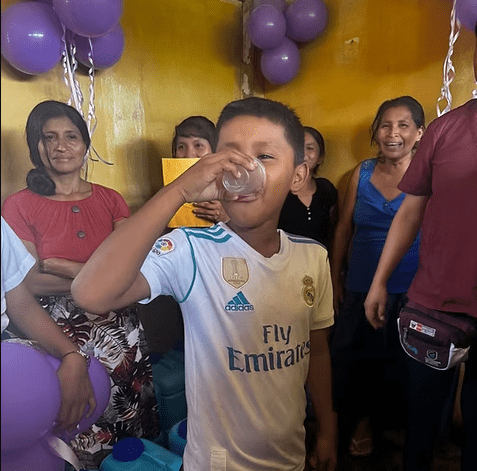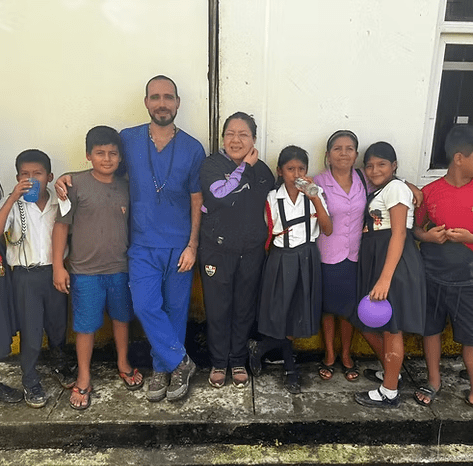
Imagine raising your children surrounded by rivers, yet never having clean water to drink. In more than 1,500 indigenous Amazonian communities, families face constant risk from waterborne diseases. Medical help is far away. And children suffer illnesses that should not exist in the 21st century. Whole communities need to go beyond the level of just surviving.
This is why Amazon Hope is building an innovative new solution – created by Peruvians, for Peruvians.
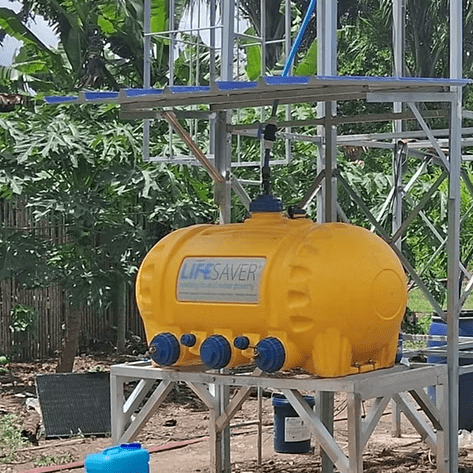
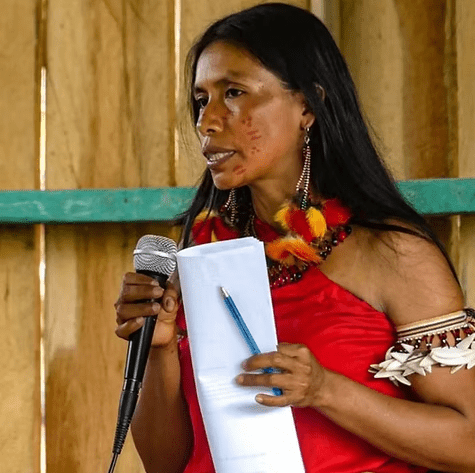
We are launching a pilot in six Jivaro communities—places so remote they barely appear on maps—using a model that combines innovative water purification technology, community leadership by trained local women, health partnerships, and education for families and schools to ensure lasting change. This is not just charity. It is the beginning of a self-sustaining development model that can be scaled to hundreds of communities in the Peruvian Amazon, even across other regions.
Safe water is the first step. With it, we open the door to lower child malnutrition and disease, more time for education, less time lost to sickness, and hope for families who have always been excluded. This six-village test is just the beginning. With your help and the right investment in place, we plan to expand to serve more villages and create a broader foundation for water sanitation, education, and connectivity to start changing lives today.
Join us in building a bridge of health and dignity across the Amazon.
We are seeking donations to support our launch and assist underserved communities in the Peruvian Amazon.
As we begin to install our technology, we’ll tell you exactly where your money goes, show you the communities it helps, and prove the technology works. Because children’s lives are too important for anything less than complete transparency.
Our Commitment:
100% transparent use of donations
Real-time progress updates from the six communities
Direct partnerships with the communities to make sure your donations make the biggest difference
Support and education to ensure lasting adoption, not just quick fixes or redundant technology and tools
1. Decontaminate wetlands and all water sources such as rivers, streams, lakes, lagoons and the sea: As you know, we have plastic islands in all of these aforementioned wetlands, especially in the sea, the main source of our food and oxygen.
2. Save the lives of millions of species that live in all these wet sources, especially in the sea: We know that millions of seabirds die as a result of swallowing lids and thousands more species are affected by plastic in the sea.
3. Promote recycling as an obligation for all citizens of this planet, turning them into Eco-Social Warriors.
4. Improve the carbon footprint through our good practices.
5. Improve the respiratory health of our communities through the reuse of plastic, stopping emitting polluting Carbon Dioxide when producing new plastic.
6. Give work to the recyclers in our country, helping them to collect the product and also to the people who produce orthopedic devices.
7. Buy orthopedic devices with the funds obtained from the sale of the plastic caps.
8. Improve the quality of life of any person with special or different abilities who needs an orthopedic device, freeing them and making them independent of their condition because they do not have the possibility of acquiring a biomechanical device.
9. Release not only the person but two or more members of his or her family who maintain permanent care for this person to meet his or her basic needs such as cleanliness, exercise, taking him or her for a walk, feeding him or her, among others.
10. Releasing these people will improve the economic and emotional condition of the family as a whole, since these people will be able to develop other activities, work, study and thus achieve more income for the family.
11. Improve the self-esteem of the person deprived of their liberty without committing a crime other than not being able to buy an orthopedic device.
We comply with 11 Sustainable Development Goals – SDG:
3. Health and Wellbeing.
4. Quality Education.
5. Clean Water and Sanitation.
6. Decent work and economic growth.
7. Reduction of Inequalities.
8. Sustainable Cities and Communities.
9. Responsible Production and Consumption.
10. Climate Action.
11. Underwater Life.
12. Life of Terrestrial Ecosystems.
13. Alliances to achieve objectives.
Through the RECYCLING I GO program we prioritize SDG 4 – Quality Education, to provide education in eco-social values and raise awareness among 1 million Peruvians, reuse collected plastic as a resource for the acquisition of biomechanical devices for low-income people and/or with certain locomotor limitations, thus making this program scalable, sustainable and sustainable over time.